




RUNXIN F56C
RUNXIN F56C
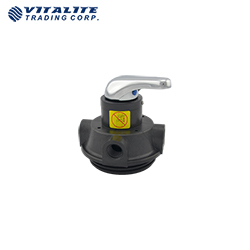
The Runxin F56C is a manual multi-port filter valve designed to manage backwashing and rinsing cycles for various water filtration systems. One of its main advantages is its simplicity; it eliminates the need for complex piping and multiple valves by providing a single, easy-to-use unit. By simply turning a handle, users can perform service, backwash, and fast rinse functions.
Specification
- Valve Type: Manual Multi-Port Filter Valve
- Flow Capacity: 1 m³/h
- Mount Type: Top Mount
- Inlet/Outlet Size: 1/2" Female Thread
- Drain: 1/2" Female Thread
- Riser Pipe: 1.05 Outside Diameter
- Water Turbidity: <20 FTU
- Working Pressure: 0.15 - 0.6 MPa (1.5 - 6 bar)
- Water Temperature: 5°C - 50°C (41°F - 122°F)
- Base: Tr118x6
- Filter Tank: 20" Housing
Primary Applications
The F56C is most suitable for smaller, lower-flow water treatment applications:
- Point-of-Use (POU) Filtration: Ideal for under-sink or countertop filters using 20-inch filter housings.
- Pre-Treatment for Reverse Osmosis (RO) Systems: Protecting RO membranes by backwashing sediment or carbon filters.
- Small Sand and Activated Carbon Filters: Perfect for managing filtration in small-scale commercial, agricultural, or residential settings.
How It Works & Its Key Features
- Simple Manual Operation: The valve is operated by a handle that rotates through a specific angle. Turning the handle changes the internal flow paths, cycling the filter through different operating modes: Filter (Service), Backwash, and Fast Rinse. This makes it very reliable and easy to maintain without needing electrical power or complex programming.
- Durable Ceramic Seal: The F56C has a corrosion-resistant ceramic moving disc and seal, ensuring a reliable seal, preventing leaks, and providing excellent durability and wear resistance over many operational cycles.
- Compact & Versatile Design: The valve features all water connections (inlet, outlet, drain) on the top, enabling a compact system layout. It operates under line pressure without a bypass valve, as the backwash cycle effectively isolates the service flow.
